
How to Fix Lower Back Pain From Sitting: A Physiotherapist's Guide
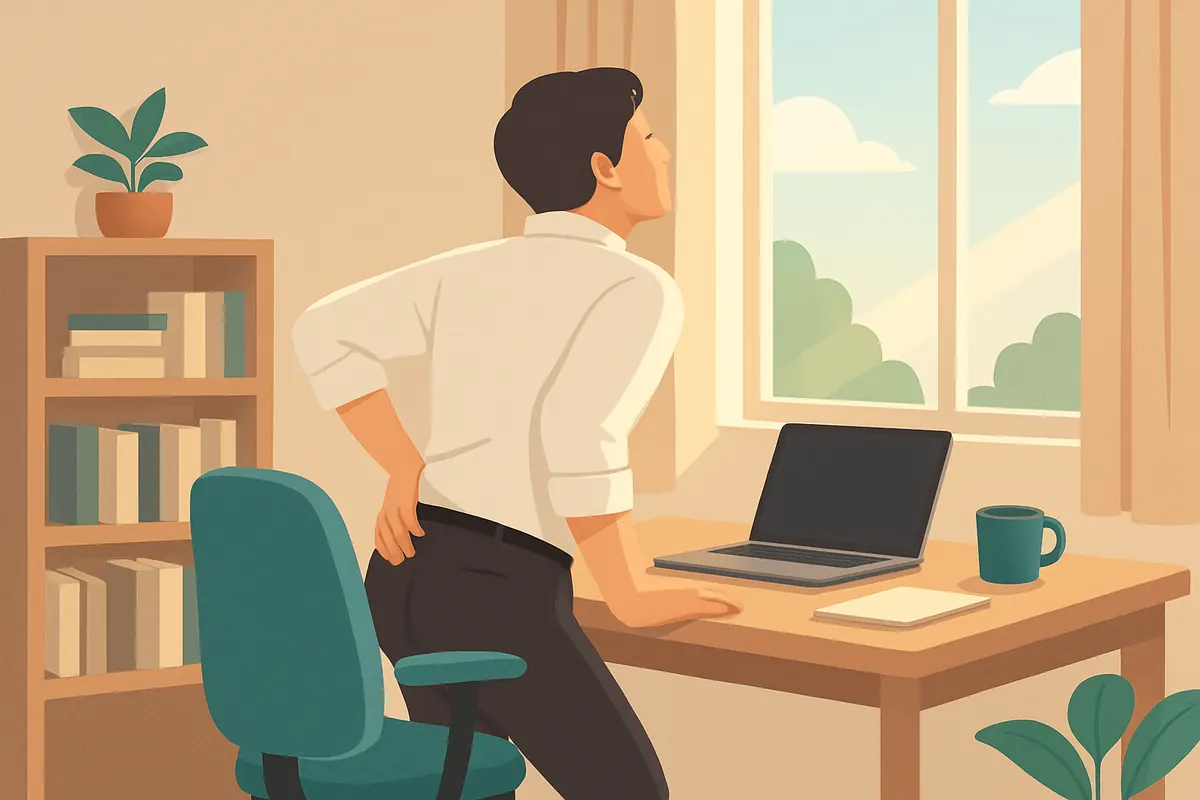
If you spend most of your day at a desk, you already know the feeling. By mid-afternoon a dull ache settles into the lower back, standing up takes a second longer than it should, and by evening you are stretching in the kitchen hoping something clicks. Lower back pain from sitting is one of the most common complaints we see at Example Physiotherapy Clinic, and the good news is that for most people it is also one of the most fixable.
This guide explains why sitting loads the lower back the way it does, what you can change today, and when it is time to book an assessment rather than keep experimenting on your own. It is written as general education, not as a diagnosis. If your pain is severe, came on after an injury, or comes with numbness, weakness or changes in bladder or bowel control, contact a clinician or emergency services before trying anything below.
Key Takeaways
- Sitting is not "bad" for your back, but sitting in one position for hours without moving is. The spine and its supporting muscles are built for variety.
- Most desk-related lower back pain is mechanical: it comes from sustained postures, weak or tired trunk muscles and stiff hips, not from structural damage.
- Small, frequent movement breaks reduce pain more reliably than a single long stretch at the end of the day.
- A chair and desk set-up that lets you change position matters more than any single "correct" posture.
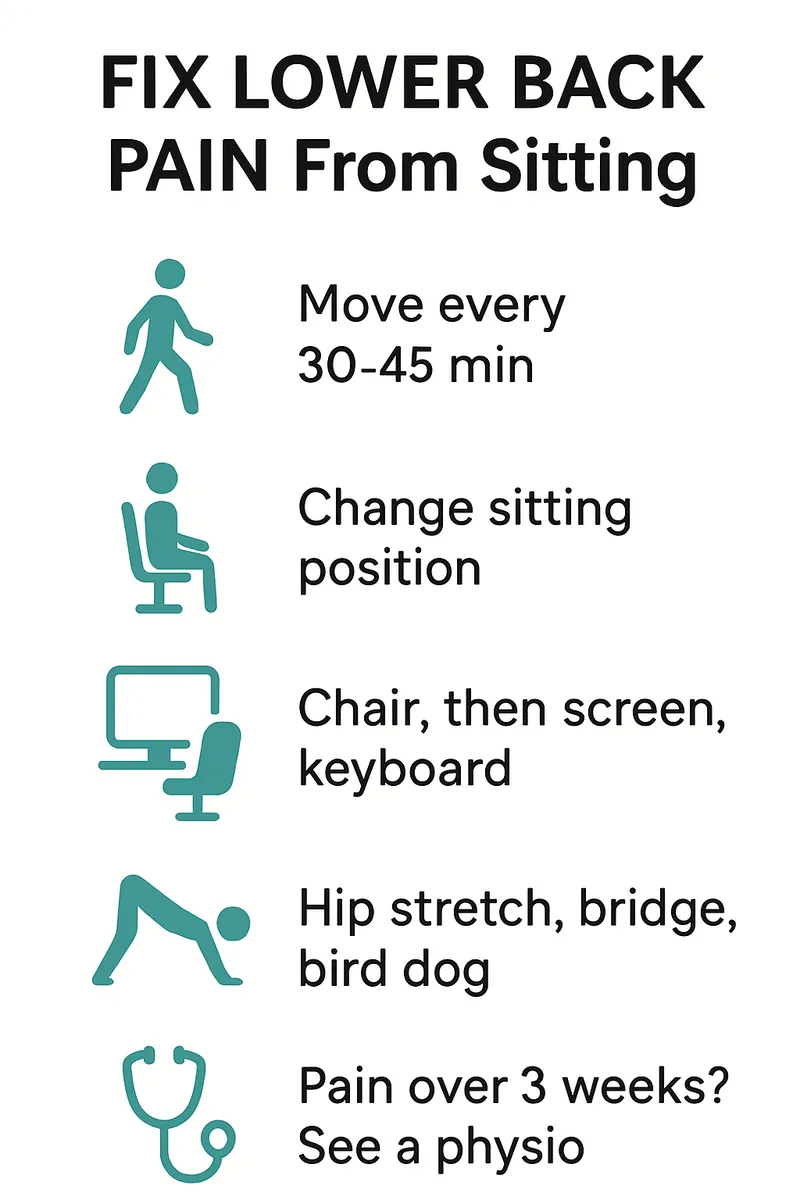
- Persistent pain beyond two to three weeks, or pain with nerve symptoms, deserves a professional assessment.
Why Sitting Makes Your Lower Back Hurt
The load on your lumbar spine changes when you sit
When you stand, the natural inward curve of the lower back (the lumbar lordosis) shares the load between the discs, the small joints at the back of each vertebra and the surrounding muscles. When you sit, especially when you slump, that curve flattens. The pelvis tilts backwards, the discs at the base of the spine take more of the pressure, and the muscles that normally hold you upright switch off because the chair is doing the work.
None of this is dangerous in itself. Discs are resilient structures that tolerate pressure well. The trouble is duration. Tissue that is loaded in one direction for eight hours, five days a week, gets sensitised. It starts to complain earlier and louder each day.
Your hips stiffen and your glutes stop working
Sitting keeps the hip flexors at the front of the hip in a shortened position and the gluteal muscles at the back in a lengthened, inactive one. Over months this combination changes how you stand and walk. When the hips cannot extend fully, the lower back compensates by arching more, and that extra movement is often what people feel as pain when they finally stand up.
Fatigue, not weakness, is usually the real problem
Patients often tell us they have a "weak core". In our experience the trunk muscles are rarely weak in the way a gym test would show. They are tired. Holding a static posture is endurance work, and endurance drops sharply when muscles are not given short rests. This is why the single most effective change is usually not a new exercise but a new habit: moving more often.
What to Change Today
Break up sitting every 30 to 45 minutes
Set a timer. When it goes off, stand, walk to get water, or simply shift your weight and reach overhead for twenty seconds. The break does not need to be long. Research on sedentary workers consistently shows that frequent short breaks reduce reported discomfort more than fewer, longer ones.
If a timer feels intrusive, attach movement to something you already do: stand for every phone call, walk during the first minute of every meeting, or drink from a small glass so you have to refill it.
Sit in more than one position
There is no perfect posture. The best posture is the next one. A supportive chair should let you sit upright with your lower back gently curved, but it should also let you recline slightly, perch forward, and tuck one foot under you now and again. Variety spreads the load across different tissues, which is exactly what the spine wants.
Adjust your desk in this order
- Chair height: feet flat, knees at roughly hip height or slightly lower.
- Back support: the curve of the chair should sit in the small of your back. A rolled towel works if the chair has nothing.
- Screen height: top of the screen at eye level so you are not craning forward, which pulls the whole spine into flexion.
- Keyboard and mouse: close enough that your elbows stay by your sides.
A sit-stand desk helps, but only if you actually alternate. Standing all day creates its own problems.
Three exercises that help most people
These are gentle and safe for most people with non-specific lower back pain. Stop if anything sharpens the pain or sends it down the leg.
Seated pelvic tilts. Sit tall, then slowly roll the pelvis backwards so the lower back rounds, then forwards so it arches. Ten slow repetitions, three times a day. This restores the sense of movement in the lumbar spine that sitting takes away.
Hip flexor stretch. Kneel on one knee with the other foot forward. Tuck your tailbone under and gently shift forward until you feel a stretch at the front of the kneeling hip. Hold thirty seconds each side.
Glute bridge. Lie on your back with knees bent. Push through your heels and lift your hips until your body forms a straight line from shoulders to knees. Hold for two seconds and lower. Two sets of ten. This wakes up the gluteal muscles that sitting puts to sleep.